Beyond the Meal Plan: Giving Students More Dining Freedom Without Losing Control
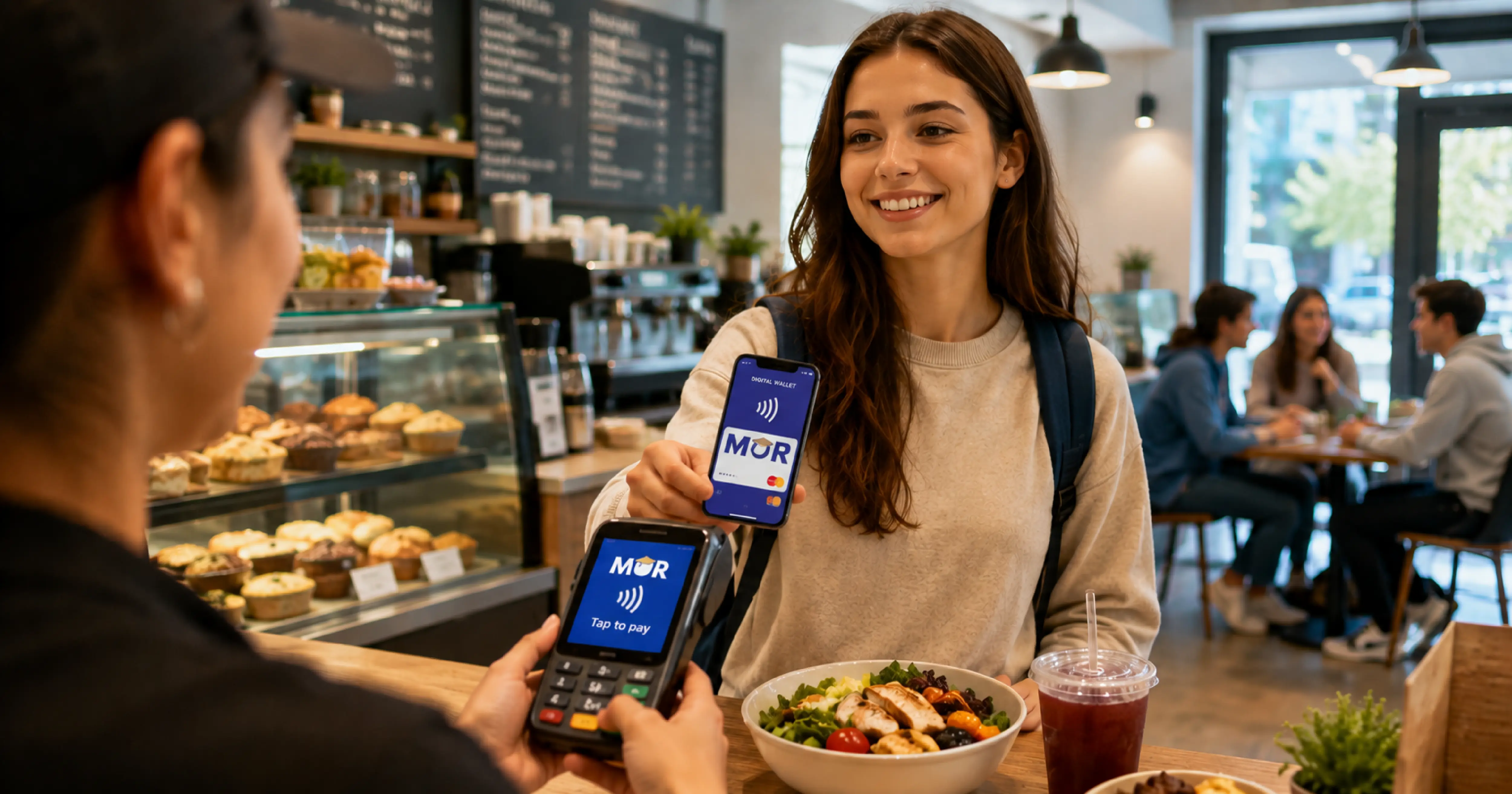
Campus Dining Has Outgrown the Traditional Meal Plan
Campus dining used to be relatively straightforward.
Students had a meal plan, visited a dining hall, and used their available meals or dining funds within a defined campus environment.
Today, that environment looks very different.
Students may still eat in dining halls, but they may also grab breakfast at a café, order delivery, buy groceries, or eat at a restaurant away from campus.
The expectation for flexibility has changed.
For colleges and universities, however, providing that flexibility isn't as simple as adding more places to eat. Institutions still need to manage budgets, spending limits, dining policies, and accountability. Food service teams need systems that don't create unnecessary administrative work, while students want choices without having to think about the technology behind every transaction.
The challenge is no longer simply providing a meal plan.
It's creating a spending experience that works for everyone involved.
More Choice Can Also Mean More Complexity
Giving students additional dining options sounds simple until those options begin operating across different systems.
A dining hall may use one process. A café may operate differently. Off-campus businesses may have their own payment infrastructure. Students can find themselves navigating multiple dining options while administrators and food service teams manage the complexity behind them.
Adding more technology doesn't automatically solve that problem. Sometimes it creates another system to maintain.
MOR Card was designed around a simple idea: one card, one system, with more ways for students to use their dining funds. The solution is designed to simplify campus dining operations by consolidating multiple systems into one unified platform that can be used across campus.
Freedom Works Better With the Right Guardrails
Student choice and institutional control can sound like competing priorities, but they don't have to be.
Students want the freedom to make their own dining decisions. Institutions still need to ensure those decisions operate within appropriate budgets, limits, categories, and campus policies.
MOR Card allows institutions to tailor student spending through controls around budgets, limits, and category restrictions. That gives administrators a way to expand dining flexibility while maintaining the accountability they need.
For students, those controls can remain largely in the background.
They can focus on deciding what they want to eat and where they want to eat rather than navigating the administrative structure behind the transaction.
The goal isn't simply to give students more places to spend.
It's to make greater choice manageable.
One Card Can Open More Dining Possibilities
The modern student dining experience doesn't always fit neatly inside the walls of a dining hall.
A student's day moves across campus and, often, beyond it.
Breakfast might come from a café before class. Lunch might be at the dining hall. Groceries may be needed later in the week. Dinner could come from a restaurant or delivery.
MOR Card is built around this broader view of student dining.
The platform is designed to support dining possibilities both on and off campus, giving students more freedom to choose options that fit their schedules and preferences while allowing the institution to maintain its policies and controls.
Students don't all use campus dining in the same way. Their schedules, preferences, and routines are different.
A more flexible dining system can acknowledge those differences without requiring the campus to give up oversight.
Better Visibility Can Lead to Better Decisions
Transactions don't only move money. They can also provide information about how students use their dining options.
MOR Card provides visibility into spending habits and dining trends, giving different stakeholders useful information to better understand how dining funds and services are being used.
Instead of simply knowing that transactions happened, campuses can begin understanding how students are interacting with their dining environment.
Visibility doesn't make those decisions automatically.
But it can give the people responsible for campus dining better information to make them.
Campus Dining Doesn't Have to Stop at the Campus Boundary
Universities don't exist separately from the communities around them.
Students visit cafés, restaurants, grocery stores, and other businesses beyond campus every day.
For students, that can mean greater variety. For businesses, it creates another way to participate in the campus dining ecosystem. For institutions, it can expand student choice without necessarily adding another complicated system to manage.
The result can be a dining ecosystem that feels less confined by location.
Campus dining becomes less about where a meal is purchased and more about creating a connected experience around the student.
Simplicity Matters Behind the Counter Too
Students may experience a payment system for only a few seconds at checkout.
Campus teams live with that system every day.
That makes usability just as important behind the scenes as it is at the point of purchase.
New technology can create problems when it requires complicated deployment, extensive training, or another difficult platform for staff to manage.
MOR Card is designed for quick adoption, requiring minimal training and ongoing upkeep for stakeholders across campus.
For food service teams, that can mean spending less time navigating technology and more time focusing on the dining experience itself.
For students, simplicity means something even more basic.
The system should simply work.
Different Stakeholders, One Dining Experience
Campus dining touches more people than the student standing at the register.
Administrators are thinking about policies, budgets, and operations. Food service leaders are thinking about service quality and efficiency. Families may be thinking about how students are managing their available funds. Local businesses are thinking about reaching students without introducing unnecessary complexity.
And students are mostly thinking about getting something to eat.
MOR Card approaches these groups as participants in the same ecosystem rather than completely separate users. The platform is designed to provide institutions with control, food service teams with operational simplicity, families with greater visibility, students with more choice, and participating businesses with an opportunity to connect with the campus community.
The needs are different.
The experience doesn't have to be disconnected.
The Future of Campus Dining Is More Flexible
Campus dining will continue to change because student life continues to change.
Students move between classrooms, residence halls, workplaces, activities, dining locations, and surrounding communities throughout the day.
Their dining experience needs to move with them.
Greater flexibility doesn't have to mean giving up institutional control, and greater control doesn't have to mean limiting student choice.
The opportunity is to create systems capable of supporting both.
Because the next generation of campus dining may not be defined by a single dining hall or even a traditional meal plan.
It may be defined by how easily students can access the choices around them and how simply campuses can make those choices possible.


Comments (0)
Leave a Comment
Your email address will not be published. Required fields are marked *