From Containers to Climate Impact: How Campuses Are Turning Reuse Into Measurable Sustainability Wins
The Shift Toward Sustainable Campus Dining
Campus dining has changed quite a bit over the last several years. Students today expect convenience and flexibility when it comes to meals, whether they are heading to class, studying late at the library, or grabbing lunch between activities. As more dining programs expand takeout and grab-and-go options, the use of disposable containers has naturally increased along with it.
Most colleges and universities already have recycling programs in place, and those efforts continue to play an important role in campus sustainability initiatives. The reality, however, is that many institutions are beginning to look beyond recycling alone. Dining administrators and sustainability leaders increasingly want to understand the actual impact their programs are making and how those efforts make a real environmental impact.
Reusable container programs have become one practical solution to this challenge.
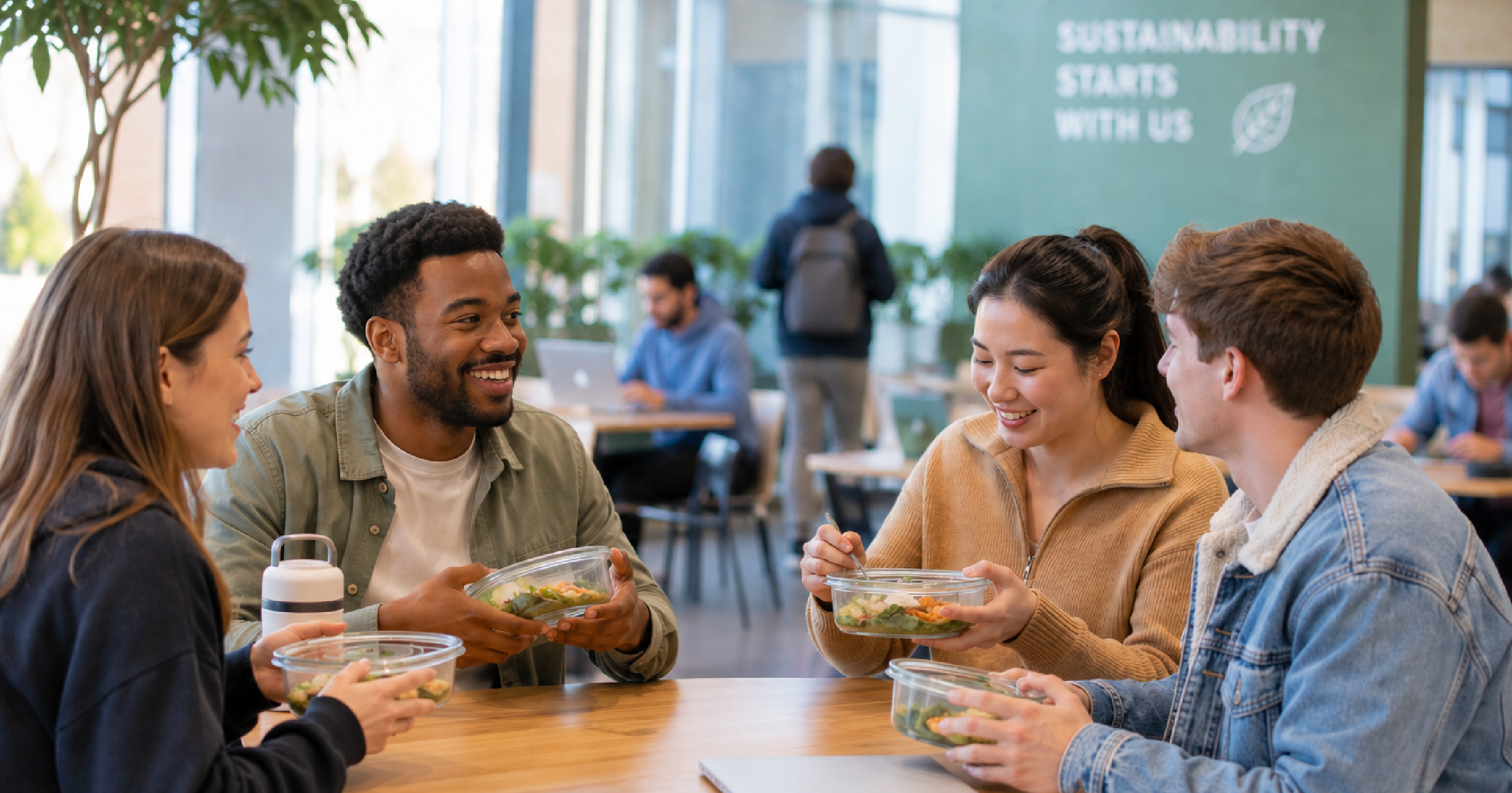
The idea itself is fairly simple. Students can take meals to go using durable reusable containers, return them after use, and the containers are then cleaned and placed back into circulation. In many ways, reusable programs allow campuses to continue offering convenience to students while also reducing dependence on single-use packaging.
That may sound straightforward, but managing a reuse program across a busy campus environment can become complicated rather quickly.
Turning Daily Dining Operations Into Useful Data
One of the biggest challenges for dining teams has traditionally been visibility. Without reliable tracking systems, it can be difficult to know how many containers are actively circulating, how often they are being returned, or how much waste is actually being reduced over time.
For many programs, measuring success has involved a fair amount of estimation.
ReusiTrack was designed specifically for colleges and universities operating reusable container programs. The cloud-based platform helps dining teams monitor day-to-day activity while giving administrators a clearer picture of how their programs are performing across campus.
Instead of relying on rough estimates, institutions can track information such as:
- waste diverted from landfills,
- estimated CO₂ reduction,
- total reuse cycles,
- and cost savings associated with reusable container programs.
By connecting everyday dining activity with real operational data, campuses are able to better understand how small daily actions contribute to larger sustainability goals over time.
Encouraging Participation Across Campus
Anyone working in campus dining knows that participation plays a major role in the success of any reuse initiative.
Students, faculty, staff, and guests interact with dining programs differently, and maintaining consistent engagement across campus can sometimes be challenging. ReusiTrack supports configurable patron profiles that help dining teams better understand participation levels, recognize engagement trends, and identify usage patterns throughout different areas of campus.
Features such as participation tracking, sustainability milestones, achievement badges, and leaderboard-style visibility can help encourage involvement by making sustainability efforts more visible within the campus community. Over time, those small behavioral shifts can make a meaningful difference in helping reuse habits become part of everyday campus life.
More importantly, ReusiTrack helps transform sustainability from simply an operational initiative into part of the campus's culture and identity. By celebrating participation and recognizing individuals who consistently contribute to waste-reduction efforts, institutions can create stronger emotional connections between students and the university's sustainability mission.
At the end of an academic year, campuses can choose to recognize top participants, not with temporary awards or certificates, but with something far more meaningful and lasting. Students, faculty, or staff members who achieve exceptional reuse cycle counts, sustainability milestones, or the highest achievement badges can be honored by planting a tree, garden feature, or living plant dedicated in their name on campus grounds.
This type of recognition serves as a powerful visual reminder that small daily actions can collectively have a long-term environmental impact. It also allows those recognized individuals to remain part of the campus's living fabric long after graduation. Years later, alumni can return and show their children or grandchildren the tree or garden space that represents the difference they helped make during their time on campus.
Programs like these not only strengthen participation in reuse initiatives but also contribute to the campus
beautification, reinforce institutional sustainability goals, and inspire future generations of students to actively participate in building a more sustainable campus community.
Managing Reusable Programs Across Multiple Locations
Campus dining operations rarely function from a single location. Students may pick up meals in one dining hall, eat elsewhere on campus, and return containers at a completely different location later in the day.
Flexibility like that is important for students, but it also creates additional operational challenges for dining teams.
ReusiTrack allows reusable containers to move across multiple service locations while still giving administrators visibility into container circulation and return activity. Dining managers can monitor aging inventory, track overdue returns, and maintain better oversight of the overall program.
Integrated management tools also support invoicing, billing oversight, and operational reporting, helping institutions maintain efficient and accountable reuse programs without adding unnecessary complexity to day-to-day operations.
Looking Beyond Traditional Recycling
As universities continue prioritizing sustainability initiatives, reusable container programs represent an important step beyond traditional recycling efforts. More importantly, they give institutions an opportunity to better measure the environmental impact of their programs using real campus data rather than assumptions alone.
At the end of the day, sustainability progress is often built through small, everyday actions repeated consistently over time. By connecting reusable container activity with measurable reporting, campuses gain a clearer understanding of how routine dining operations can contribute to meaningful long-term environmental goals.


Comments (0)
Leave a Comment
Your email address will not be published. Required fields are marked *